chihuahua-bullcreek-comparison

Ancient Chihuahuas Once Roamed, and Eaten, in Southeastern U.S.?

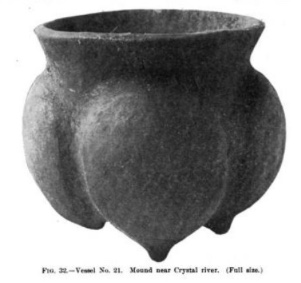
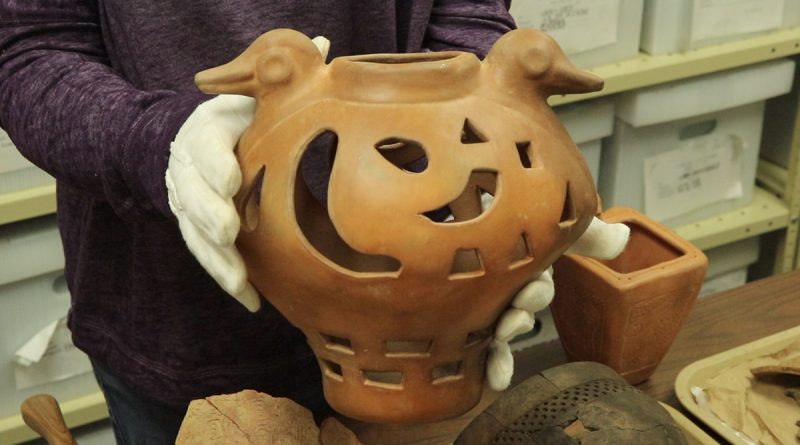
Chihuahua pot from Niesler Mound in Georgia The origins of the Chihuahua have been lost in the mists of time yet new research reveals they once roamed the southern states of Georgia and Tennessee. The discovery was made by analyzing dog effigy pots unearthed in Georgia and Tennessee to determine the most likely breed they [...]

February 15, 2012
Sapelo Shell Ring Complex

Ancient walled city, older than Egypt’s pyramids, unearthed off Georgia coast

Watch an excerpt from the Lost Worlds: Georgia DVD.   Buy today or make a donation and help support LostWorlds.org. All proceeds help fund future videos and exhibits. Six hours southeast of Atlanta off the Georgia coast on Sapelo Island, archaeologists have unearthed the remains of an ancient walled city which predates the construction of [...]

January 30, 2012
yupaha-brasstown-bald

Possible Mayan Site Discovered in Georgia Mountains?

Architect and scholar Richard Thornton has published his findings about an archaeological site on the side of Georgia’s highest mountain peak, Brasstown Bald. His conclusion, that the site was built by the Maya, could rock the archaeological community who have insisted for decades that no evidence existed for the presence of people from Mexico in [...]

December 22, 2011
spiro conch baldwins small

Spiro started upward spiral in 700 A.D.

This engraved conch shell was unearthed in Craig Mound at Spiro Mounds in Oklahoma. LeFlore County, often referred to as “Little Dixie,” was once home to a thriving national center of commerce. This lively metropolis enjoyed its heyday not in recent memory, but between 700 and 1400 A.D. According to Dennis Peterson, archaeologist and site manager [...]

August 12, 2011
Solar_flare_(TRACE)

Did A Massive Solar Proton Event Fry The Earth

Close to the end of the last ice age there was a sudden disappearance of many mammalian species which some paleontologists say was the most severe since the disappearance of the dinosaurs 65 million years ago. In North America 95 percent of the megafauna became extinct, these being predominantly mammals having body weights greater than [...]

August 11, 2011
serpent mound

New Serpent Mound could be world’s largest

To the untrained eye, there’s nothing special about the earthen hump that runs for hundreds of feet alongside picturesque Miami Bluff Drive and curves down along the edge of the woods toward the Mariemont Swimming Pool. At certain points, it’s undetectable from the road because trees, honeysuckle and weeds grow on parts of it. But [...]

August 11, 2011
saluda_river_artifacts_knives

Saluda River artifacts going on display

COLUMBIA — Fans of the Saluda River now have a new place to learn about the area’s Native American history. Officials from South Carolina Electric & Gas and the Saluda Shoals Park are holding a ribbon-cutting ceremony on Wednesday to open a new display at the Saluda Shoals Environmental Education Center in Columbia. The center [...]

July 28, 2011
Etowah Mounds Bird Man copper plate

Researchers reveal how prehistoric Native Americans of Cahokia made copper artifacts

EVANSTON, Ill. — Northwestern University researchers ditched many of their high-tech tools and turned to large stones, fire and some old-fashioned elbow grease to recreate techniques used by Native American coppersmiths who lived more than 600 years ago. This prehistoric approach to metalworking was part of a metallurgical analysis of copper artifacts left behind by [...]

June 13, 2011

Ancient Seeds Sow Debate Over Sunflower-Farming Origins

Sunflowers were grown as a domesticated crop in Mexico more than 2,000 years ago, according to a new study. The new findings run counter to a theory that sunflower farming began in what is now the U.S. East and then trickled south into Mexico.

February 3, 2011 0

New Mexico’s Chaco Canyon: A Place of Kings and Palaces?

Kings living in palaces may have ruled New Mexico’s Chaco Canyon a thousand years ago, causing Pueblo people to reject the brawny, top-down politics in the centuries that followed, according to a University of Colorado at Boulder archaeologist.

February 3, 2011 0

Ancient Rock Art Depicts Exploding Star

A rock carving discovered in Arizona might depict an ancient star explosion
seen by Native Americans a thousand years ago, scientists announced today.

If confirmed, the rock carving, or “petroglyph” would be the only known
record in the Americas of the well-known supernova of the year 1006.

February 3, 2011 0

Heavens offer unique clues to the seasons

Before the advent of calendars, the only way to mark the changing of the seasons was through direct observation. Ancient peoples observed the passage of the sun north from the Winter Solstice, and then south from the Summer Solstice. In Mesoamerica the people observed the sun passing directly overhead twice a year by using special tubes in the temples that pointed at the zenith.

February 2, 2011 0

Ancient Earthworks Electronically Rebuilt, To Become A Traveling Exhibit

Native American cultures that once flourished in Ohio, Kentucky, Indiana and West Virginia constructed geometric and animal-shaped earth works that often rivaled Stonehenge in their astronomical accuracy. This lost heritage from the Adena, Hopewell and Fort Ancient cultures is returning in the form of a traveling exhibit that will include virtual reconstructions of earthworks from 39 sites.

February 2, 2011 0

Archeologists to search for lost mission

Amateur archeologists will get a chance to search this summer for the lost mission of Santa Isabel de Utinahica, built in the wilderness in the 1600s for a lone friar who was dispatched to evangelize among the Indians on the edge of Spain’s colonial empire.

February 2, 2011 0
Mexican-syle artifacts from Mann Hopewell Site

New Artifacts Suggest Mexican connection to Ohio’s Hopewell Culture

Jaguars and panthers aren’t from Indiana but they show up at the Mann Hopewell Site as beautifully detailed carvings. Put them together with clay figurines that have slanted eyes — not a Hopewell feature — and Linderman says we could be looking at a connection between Indiana and Central or South America.

February 2, 2011 0
watson brake

Work Continues on Watson Brake Site

Watson Brake, an area of mounds south of Monroe, was discovered by local archaeologist Reca Jones more than 30 years ago. Since then, she has worked tirelessly to have the area declared a state park to preserve its treasures.

February 2, 2011 0
greater and lesser temple mounds at Ocmulgee Mounds

More early dwellings at Ocmulgee monument site, archaeologist finds

An ancient civilization of mound builders who lived near the Ocmulgee River just northeast of what is now downtown Macon may have been home to more native people than originally thought. Though the research, much of it done with a ground-scanning instrument to roughly map underground shapes and forms, is still under way, early analysis seems to indicate more unearthed dwellings at the site than were previously known to have existed.

February 2, 2011 0

Ancient Massacre Discovered in New Mexico — Was It Genocide?

Seven skeletons discovered in a remote New Mexico canyon were victims of a brutal massacre that may have been part of an ancient campaign of genocide, archaeologists say. The victims—five adults, one child, and one infant—were members of an obscure native culture known as the Gallina, which occupied a small region of northwestern New Mexico around A.D. 1100

February 2, 2011 0
aztec serpent jade mosaic

Turquoise suggests new trade routes between ancient America and Mexico

Thirty years ago the archaeological scientists Garman Harbottle and Edward Sayre used neutron activation analysis to show that turquoise mosaics from Mexico, found as far away as the great Maya city of Chichén Itzá in Yucatan and dating back to around AD900, used raw material originating in the Cerrillos mines between Albuquerque and Santa Fe in New Mexico, an overland distance of some 3,200 km (2,000 miles).

February 2, 2011 0
weeden island canoe

45-Foot Ancient Canoe Stuck In The Muck Of Weedon Island

A 45-foot canoe, buried for more than a thousand years and used by a long-dead culture of Native Americans was used to paddle over the open waters of the bay — unlike the other ancient canoes uncovered in Florida which were used to ply the calmer waters of lakes and rivers.

February 2, 2011 0

Canaveral National Seashore’s Turtle Mound survives

Ludmilla Lelis |Sentinel Staff Writer April 29, 2008 NEW SMYRNA BEACH – Scores of Native American mounds have been lost through time, but the one thought to be the nation’s highest –Canaveral National Seashore’s Turtle Mound — survived. Preservation of the mound has saved many of its secrets, clues to the past never unearthed. That’s why [...]

February 2, 2011 0
Page 1 of 212»