calusa-fishing-village

Ancient Civilizations of Florida

Native Americans constructed impressive structures(referred to as Indian Mounds) throughout the state of Florida for over 5,000 years. This Amerindian building activity occurred across three separate archaeological time periods in Florida: the Archaic period, the Woodland period, and the Mississippian period. Some of the first monumental constructions, the Horr’s Island mounds, were built along the [...]

July 12, 2011
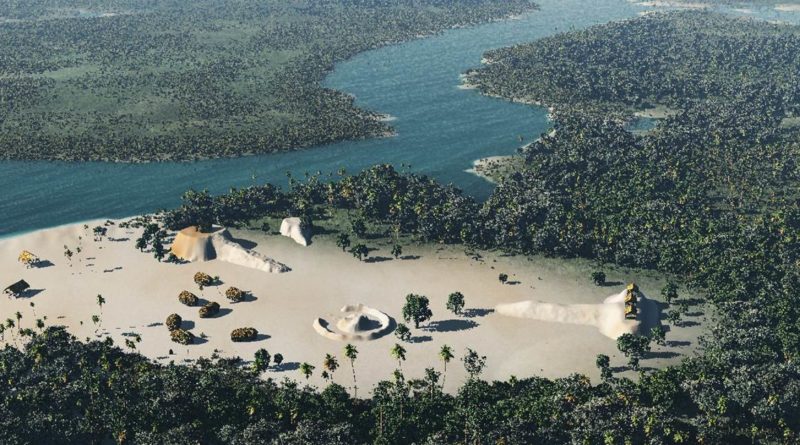
Horr's Island Mounds diagram

Horr’s Island Mounds (3000 BC)

The Horr’s Island Mounds site located in southwest Florida near present-day Fort Myers represents the beginning of a new way of life for Florida’s Native Americans. Established between 3000 – 2800 B.C., not only is this one of the first permanent villages to be occupied year round but it also is the site of the oldest burial mound in the state of Florida (and perhaps North America).

July 12, 2011 0

Tomoka Mounds (2510 BC)

Tomoka Mounds is a large complex of burial mounds and shell middens that comprise one of the earliest Native American settlements on the Central East Coast of Florida. This mound construction dates back to the Mount Taylor period, around 5500 years ago. Among the more interesting things found at the site are artifacts imported from quite some distance, including a cache of six bannerstones made of materials that are native to north Georgia.

July 12, 2011 0

Guana River & Joseph Reed Shell Rings (2050 BC)

The Guana River, Joseph Reed, and St. Augustine Shell Ring structures found in Florida represent the earliest part of the Woodland Period in pre-Columbian America. The Woodland Period extends from approximately 2000BC to 1000AD and these Shell Ring structures date from approximately 2050 BC (Florida). Shell Ring archeological structures are a unique indicator of pre- [...]

July 12, 2011 0
John Quiet Mound- An ancient NativeAmerican civilization in Florida

Big Mound Key & John Quiet Mounds (850 BC)

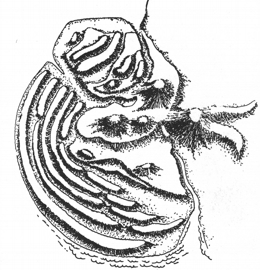
The Big Mound Key site in southwest Florida’s Charlotte Harbor has a series of semicircular ridges reminiscent of the Poverty Point site in Louisiana. Located on the Cape Haze peninsula within Charlotte Harbor in southwest Florida are two very similar mound sites: Big Mound Key and John Quiet Mounds. Approximately eighty miles due west of [...]

July 12, 2011 0

Fort Center Mounds (850 BC)

Around 850 BC new people arrive in Florida possibly from Mexico or Central America. We know this because of something they brought with them: corn. Large amounts of corn pollen were discovered at the Fort Center site in south Florida near Lake Okeechobee. The pollen was found both in the soil and embedded in the [...]

July 12, 2011 0

Ortona Mounds (250 AD)

Twenty miles southwest of Fort Center in the Lake Okeechobee basin is another equally impressive Native American site: Ortona Mounds. Occupied at the same time as Fort Center, Ortona’s collection of mounds suggests it was an administrative center whereas Fort Center was an agricultural center. The people of Ortona also dug an extensive network of [...]

July 12, 2011 0

Crystal River Mounds (150 BC)

Still another example of Woodland period archeological sites is the Crystal River Mounds found in northwestern Florida. The Crystal River mounds consist of two larger temple mound structures, a small mound used for residential purposes, as well as several burial mounds (Florida). The Crystal River mound complex is approximately 14 acres and dates variously from [...]

July 12, 2011 0

Letchworth Mounds (450 AD)

The Letchworth Mounds by nearby Monticella in Florida are, like the Crystal River Mounds, considered a complex because there are several mound structures of varying purposes. The Letchworth Mounds represent the tallest mounds of the period with the tallest one certainly being ceremonial in nature (Mainfort).   Like the other Woodland Period mound structures, the [...]

July 12, 2011 0
Great Temple Mound at Lake Jackson Mounds

Lake Jackson Mounds (1000 AD)

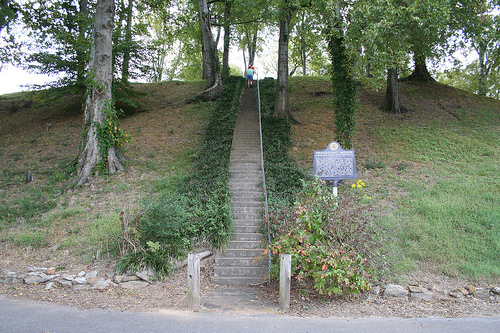
Lake Jackson Mounds State Archaeological Site, one of the Florida’s most important archaeological sites, is a 41-acre excavation. It is thought to have been the political as well as the religious center between 1200 and 1500 A.D. The tallest mound here is more than 35 feet high. The site was once known to be a large ceremonial [...]

July 11, 2011
fort_walton_mound

Fort Walton Mound (850 AD)

From the Mississippian Period, this mound is the largest on salt water and possibly the largest prehistoric earthwork on the Gulf coast and is thought to be built around 800 AD. The Indian Temple Mound is a monument to Native Americans dating back 1000 years and is a historic national landmark. The Indian Mound Temple originally served [...]

July 11, 2011
mount_royal_mound

Shields & Mount Royal Mounds (1200 AD)

The Mississippian Period that started with the building of Lake Jackson Mounds continued with the Shields and Mount Royal Mounds. During this period the Indians created the most sophisticated civilizations outside of Mexico and constructed some of the most complex Indian mound centers in the state of Florida as well as in the entire southeastern United [...]

July 10, 2011
TurtleMound1924_sm1968

Turtle Mound (1200 AD)

Dating back to 1200 AD (The Mississippian Period), this mound is the tallest in Florida and the third tallest in North America. Turtle Mound is one of the most significant geographical sites on the east coast of the U.S. Historians estimate that it comprises 33,000 cubic yards of oyster shells, extends 600 feet along the [...]

July 9, 2011
Calusa-Society-On-Top-of-World-Illustration-1-Credit-RRC-Florida-Museum-of-Natural-History

Mound Key (1500 AD)

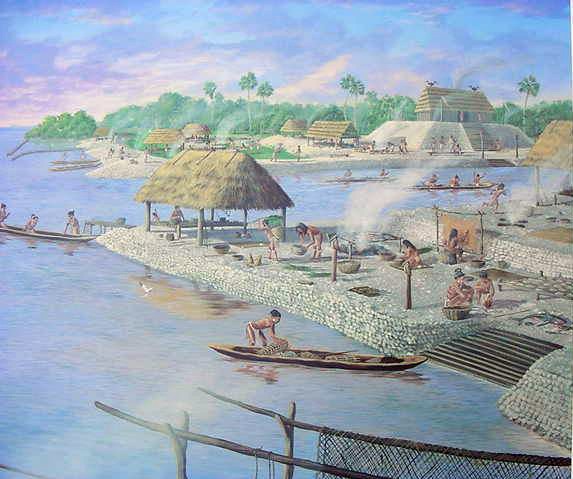
One of the most impressive accomplishments from the Mississippian time period was the construction of Mound Key, a manmade island dating back to 1500 AD built up over a thousand years from discarded shells. It featured a central canal, water-courts, and truncated pyramid shell mounds. Surrounded by forests of mangrove trees, the shell mounds and [...]

July 8, 2011
big mound_city

Big Mound City

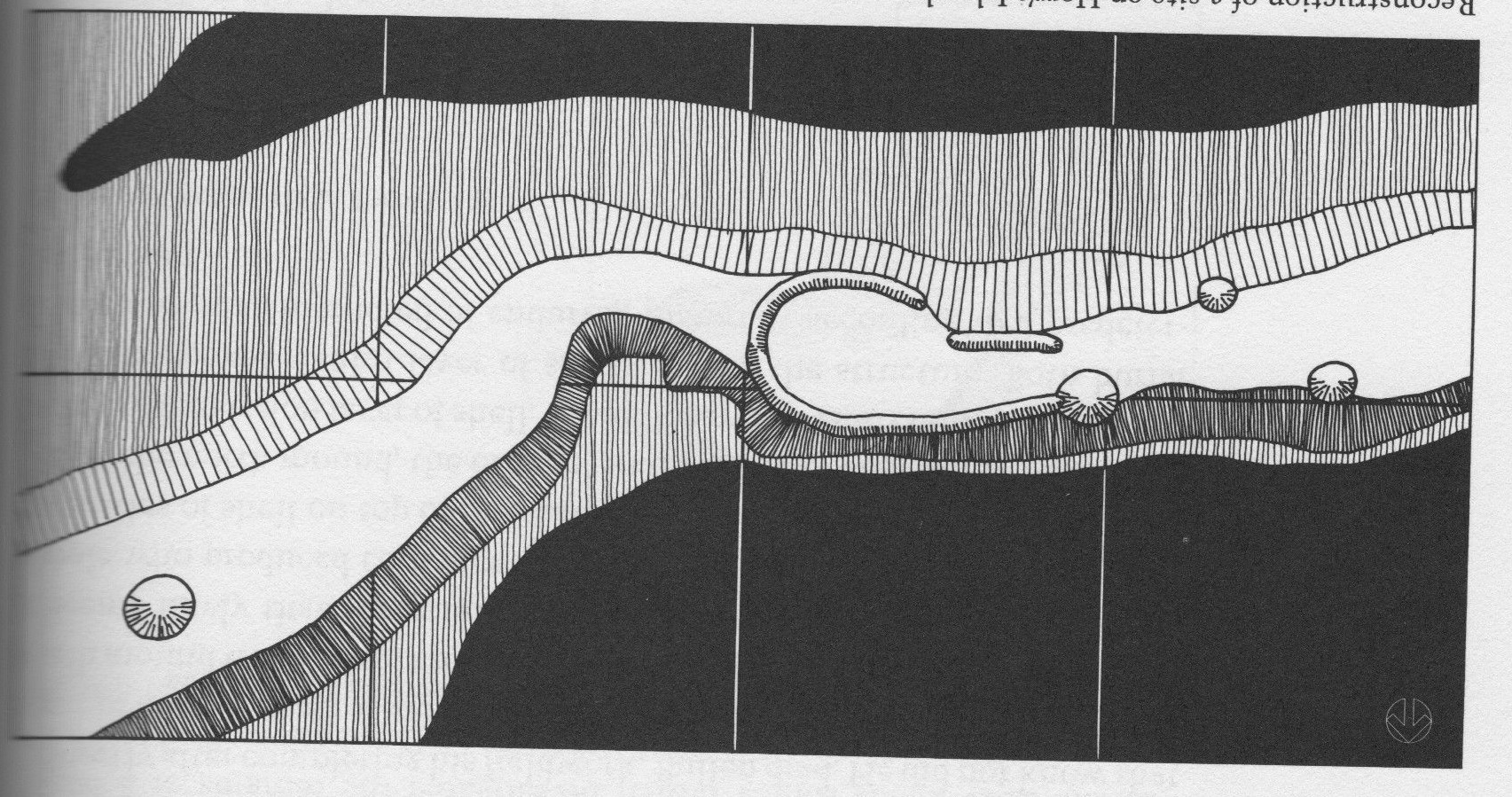
Big Mound City is an exceptionally sophisticated geometric earthwork located about 6 miles east of Lake Okeechobe. The complex possibly served to raise building foundations above the surrounding ground plain which flooded six months of the year. The mounds and causeways in the site are constructed from yellow and white sand. The large semicircular embankment [...]

July 8, 2011
madira bickel

Terra Ceia & Madira Bickel Mounds (1450 AD)

Dating back to 1450 AD, the 10-acre site that encompasses Madira Bickel Mound was named after Mrs. Madira Bickel of Sarasota, who joined her husband Karl, in preserving Native American mounds from destruction. In 1948, the mound was purchased by the Bickels and donated, along with the surrounding land, to the state. The mound itself was the first site in Florida [...]

July 8, 2011

Ancient Civilizations of Florida | Conclusion

The state of Florida has seen monumental construction projects for over 4,000 years. Beginning with the shell rings of Sapelo Island and ending with the Great Temple Mound at Etowah, the native peoples of Georgia were an industrious people with many great accomplishments (including the first known pottery in North America). The remarkable achievements of [...]

July 7, 2011 0