Kolomoki Mounds

Kolomoki Mounds Historic Park

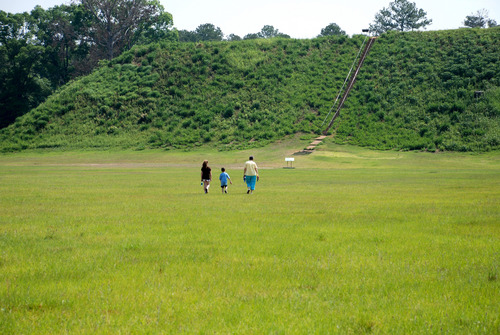
This historically significant park is the oldest and largest Woodland Indian site in the southeastern United States, occupied by American Indians from 350 to 750 a.d.  The park’s museum is built around an excavated mound, providing an unusual setting for learning who these people were and how they lived. Seven earthen mounds within the park [...]

December 22, 2011
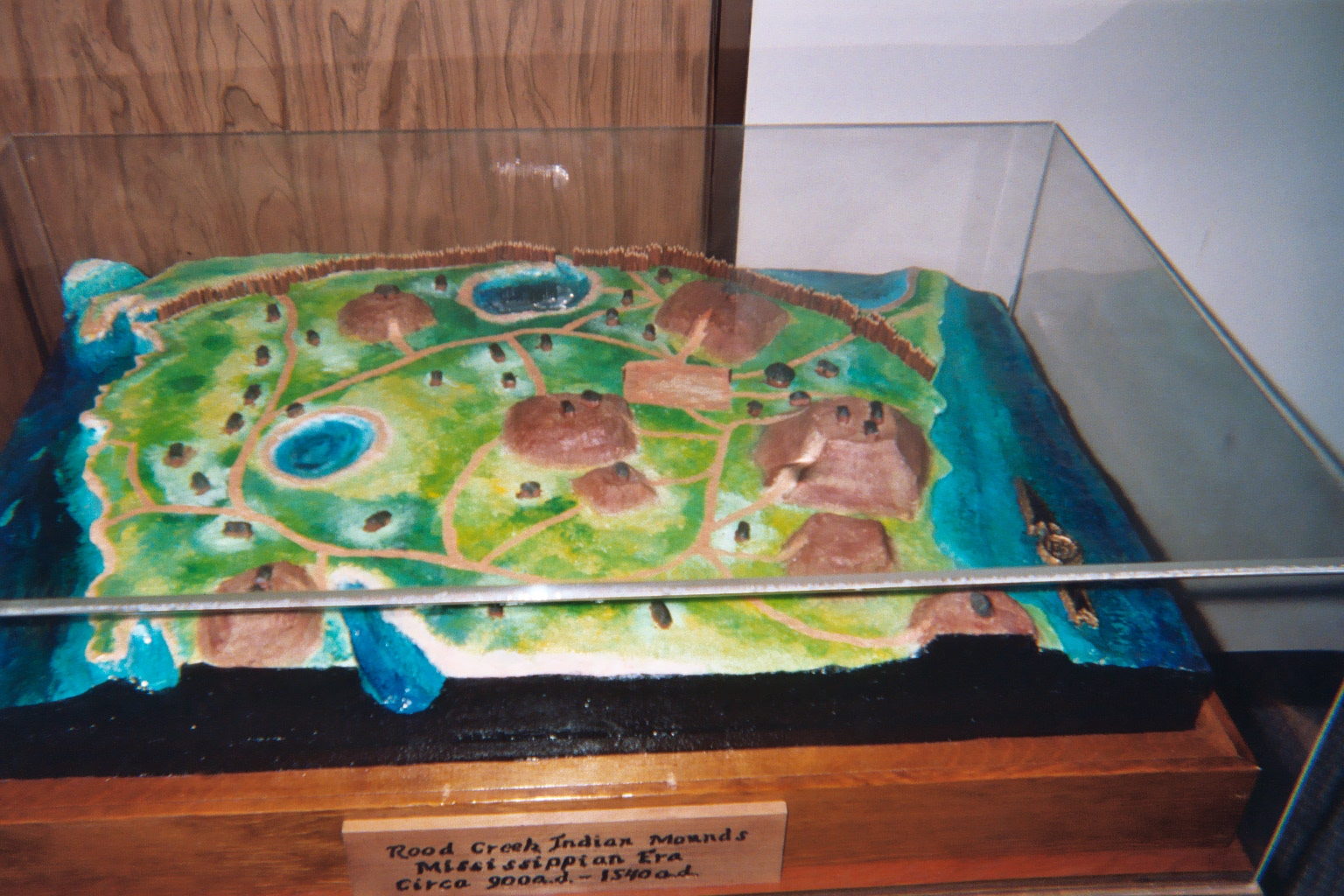
Model of Rood's Creek Indian Mounds in Kirby Interpretative Center.

Florence Marina State Park

Model of Rood’s Creek Indian Mounds in Kirbo Interpretative Center. Florence Marina is near the Rood Creek Indian Mound site located on Lake Walter F. George in western Stewart County. These eight mounds were focal points of an Indian community and served as a center for political and ceremonial activities during the Mississippian period. A [...]

December 22, 2011
columbus_museum

Columbus Museum of Arts and Sciences

Columbus Museum of Arts and Science – permanent exhibit, “Chattahoochee Legacy”. The museum houses one of the best Indian artifact collections in Georgia. Exhibits interpret many phases of the culture and lifestyles of Indians in central Georgia and Alabama. The museum also manages the Singer-Moye ceremonial complex, an earth mound site. Internal Links:      [...]

December 19, 2011
Ocmulgee Mounds

Ocmulgee National Monument

Located near Macon, this large mound group features a restored ceremonial earth lodge. While the Indian culture thrived here between AD 900-1150, there is evidence of at least 10,000 years of human habitation from the Ice Age hunters to the Creek Indians to an English trading post in 1690. Displays trace the history of the [...]

December 19, 2011
a_indian_springs

Indian Springs State Park

This Park in Butts County surrounds the mineral springs once important to the Creek Indians. A small museum depicts the history of the area. Across U.S. 23 from the park is the Indian Springs Hotel where the 1825 Treaty of Indian Springs ceding all the Creek lands in Georgia was signed. William McIntosh, who built [...]

December 13, 2011
Rock Eagle effigy mound

Rock Eagle Effigy Mound

Rocks piled to a height of 10 feet form an effigy of a soaring bird 102 feet long from head to tail and 120 feet wide from wing tip to wing tip. The quartz rock effigy mound probably served as a ceremonial center for Indians in the surrounding area. A tower overlook is adjacent to [...]

December 13, 2011
north_wilkes

North Wilkes Library/Archives/Museum

North Wilkes Library/Archives /Museum – Tignall. Nine miles north of Washington, GA on Highway 17. Small museum exhibiting the history of the Broad River Valley, the earliest settled area of Georgia. Creek, Cherokee and to some extent the Chickasaw lived in this area. Internal Links:                      [...]

December 12, 2011
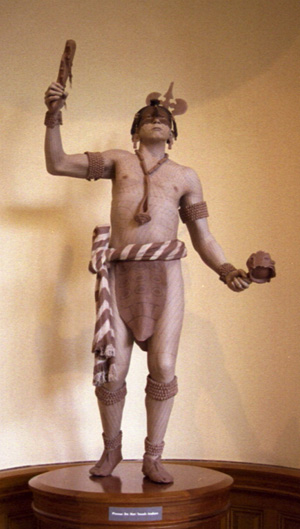
Chief from Etowah Mounds

Georgia Capitol Museum

Located in the State Capitol in Atlanta, houses exhibits and artifacts from all archaeological periods. Newly designed pre-historic exhibit on the fourth floor. Features life-size statue of chief from Etowah Mounds as well as artifacts from various archaeological sites around the state. Internal Links:                        [...]

December 12, 2011
dog river exhibit

Dog River Excavations Exhibit

Douglas County Water and Sewer Authority Building. Exhibit of artifacts found at the Mississippian Period site. Items include large pots (2 feet), pottery shards, stones, and information booklet with descriptions and drawings of the period. (706) 920-3850 Internal Links:                                  [...]

December 11, 2011
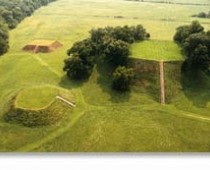
Etowah Mounds aerial view

Etowah Indian Mounds Historic Site

The Etowah Mounds, near Cartersville, thrived during the Mississippian Period. A fortified town with seven earthen mounds, Etowah was the political and ceremonial center for the surrounding area. A modern museum houses one of the best Mississippian artifact collections in the nation and features an audiovisual presentation on archaeology. Internal Links:          [...]

December 11, 2011
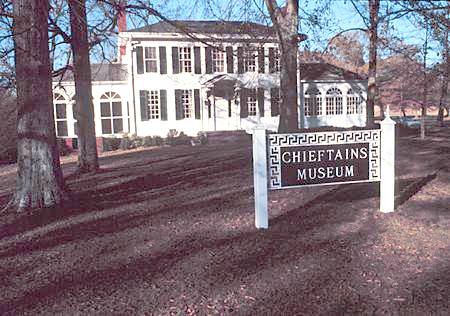
chieftains

Chieftain’s Museum-Major Ridge Home

The Chieftains on Chatillion Road in Rome was the home of wealthy Cherokee Major Ridge. The two-story house of sawed lumber, built around and earlier log cabin, overlooked the Ridge toll ferry across the Oostanaula River. Major Ridge and his son John signed the New Echota Treaty of 1835 and were assassinated for their part [...]

November 30, 2011

Habersham

History of Habersham County exhibit. Cornelia District Office of Georgia Power (on 410-411 bypass). One of the four themes of the exhibit is the Native American presence in the area. Exhibit includes old maps of area, reproduction of Cherokee post and projectile points, and information on Indian corn and gourds. Internal Links:        [...]

November 30, 2011
newechota

New Echota Historic Site

Near Calhoun, this site was the capital of the Cherokee nation from 1825 to 1838. The site consists of a modern museum; the print shop where The Cherokee Phoenix (a Cherokee-English bilingual newspaper) was printed; restored Cherokee tavern; the Council House and more. Internal Links:                      [...]

November 28, 2011
fortmtn-rock90

Fort Mountain State Park

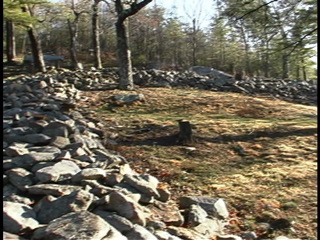
Fort Mountain State Park – A rock wall zigzags over 900 feet along the slope in the park. This wall of piled native stone, probably related to many other similar structures across the southeast, is from 3-1/2-10 feet high and from 4-1/2-16 feet wide. Archaeologists think the wall was built by Indians for ceremonial purposes [...]

November 28, 2011
Vannhouse

Chief Vann House

The Chief Vann House – Built in 1804 by James Vann who was half Cherokee and half Scottish. This two-story Federal brick home is currently a museum with furniture dating from 1780-1840, showcases with items excavated from the yard (arrowheads, etc), prints of Indians and more. Chatsworth. Internal Links:              [...]

November 26, 2011
john_ross

John Ross Home

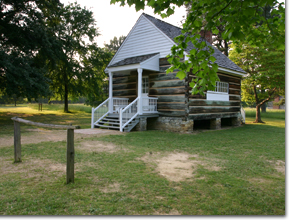
The John Ross Home – A two-story log home of John Ross, principal chief of the Cherokees. Built by his grandfather in 1779, the house was Ross’ home when the Cherokee government was formed. He moved to the Rome area in 1826, afterward to Red Clay, Tennessee, and then to the Indian Territory in Oklahoma. [...]

November 26, 2011
Sapelo Shell Ring Complex

Sapelo Island Visitors Center

Human activity on Sapelo Island spans over 4000 years. The earliest inhabitants were Paleo-Indians who used the island to fish and hunt. Their legacy is evident by the numerous shell middens located throughout the island, including a shell ring 15 feet high and 200 feet in diameter. In the early 1800′s, Sapelo Island underwent significant [...]

May 30, 2004
CUIS_Mainroad - HeaderMain

Cumberland Island National Seashore

Cumberland Island is 17.5 miles long and totals 36,415 acres of which 16,850 are marsh, mud flats, and tidal creeks. It is well known for its sea turtles, wild turkeys, wild horses, armadillos, abundant shore birds, dune fields, maritime forests, salt marshes, and historic structures. Visit Cumberland Island National Seashore for a natural experience: sun [...]

May 30, 2004
DSC02492

Crooked River State Park

Crooked River State Park is nestled atop a bluff overlooking the Crooked River. The Park is comprised of 500 acres of Longleaf Pine, Live Oak canopies, Salt Marsh and forests of Pine, Sweet Gum, Southern Bay, Southern Magnolia and Palmetto. These ecosystems provide habitat for a wide variety of resident and migratory birds such as; [...]

May 30, 2004
overlook_park

Marshes of Glynn Overlook Park

Located on Highway 17 in Glynn County, this roadside park contains a pavilion dedicated to telling the history of the coastal areas of Georgia. Includes several displays containing information about the Ice Age animals that once roamed the area as well as info about the native Timucua and Yamassee tribes who also inhabited the area.

May 30, 2004
02_b

Scull Shoals Indian Mounds

This site is home to several Indian Mounds dating from A.D. 1250- 1500. Located in a 2200 acre experimental forest, Scull Shoals also contains an extinct industrial town. You can visit the ruins of the town and the Indian mounds by following walking trails located in the park. Other Links: Official Website: The Friends of [...]

May 30, 2004
stone_mountain

Discovering Stone Mountain Museum

In Stone Mountain Park’s Memorial Hall, you’ll find the Discovering Stone Mountain Museum, where visitors can enjoy a great view of the carving and an intriguing chronological journey from Stone Mountain’s past to its present including information about the Native Americans who once occupied this area. Official Web Site The Native Americans are associated with [...]

May 30, 2004
carlos_museum

Carlos Museum

The Carlos Museum’s collection of art of the ancient Americas is substantial, consisting of more than 1,900 pieces: over 1,300 from the William C. and Carol W. Thibadeau collection and nearly 500 from the Laurence C. and Cora W. Witten II Collection. The Museum is fortunate in the breadth and depth of the collection as [...]

May 30, 2004
mushroom pot

Fernbank Museum

Fernbank’s signature exhibition, A Walk Through Time in Georgia, tells the two-fold story of Georgia’s natural history and the development of our planet. Sixteen galleries combine with theaters and dioramas to explain this complex and fascinating story. Explore the natural history of Georgia and the story of our planet as you journey through lifelike geographic regions and [...]

May 29, 2004
Page 1 of 212»